THE MENSER REAL ESTATE GROUP BLOG

How the Market is Affecting Rate Increases
U.S. equities were mixed on the week as a blockbuster jobs report had investors bracing for the Federal Reserve to raise rates sharply at its next meeting.
The S&P 500 index rose 0.4 percent to close at 4,145 in the five-day period for a third straight week of gains. The Dow Jones industrial average lost 0.1 percent on the week and the Nasdaq gained 2.2 percent.
Employers added 528,000 jobs in July — far more than economists had estimated — and the unemployment rate dropped to match a five-decade low of 3.5 percent. The United States has now recovered all pandemic-related job losses, with payrolls back to the pre-pandemic level. But the job participation rate fell and wage growth stayed at 5.2 percent.
After the report Friday, Treasury yields surged and swap contracts showed that traders think another rate increase of 75 basis points is now more likely than a 50-basis-points one when the Federal Reserve meets in September.
“The jobs number has the market and investors questioning where that recession is and when it will take hold, so some of the conviction levels are somewhat lower,” Keith Lerner, co-chief investment officer at Truist Advisory Services, said in an interview. “And I think that’s offsetting the other side of the equation, which is that the Fed will have to be more aggressive.”
Fed speakers from around the nation said they had not yet seen persuasive evidence of cooling prices that would suggest inflation was being tamed. Yet data from the Institute for Supply Management showed sharp declines in prices paid by both service providers and manufacturers in July, suggesting an easing in supply pressures.
Roughly 90 percent of the S&P 500, as measured by market capitalization, has reported second-quarter earnings. Analyst estimates suggest that profits from S&P 500 firms are on pace to increase about 7.6 percent for the April-to-June stretch vs. the same quarter a year ago.
Shares of Uber Technologies surged 37 percent on the week, the most ever, after quarterly results showed robust demand as people return to pre-pandemic travel and commute routines. On the flip side, Caterpillar slumped more than 6 percent on a slowdown in China sales.
On Wednesday, consumer price index data is projected to show that inflation rose 8.7 percent from a year earlier in July, down from the four-decade high of 9.1 percent in June.
The Treasury will sell $54 billion of 13-week bills and $42 billion of 26-week bills on Monday. They yielded 2.566 percent and 3.083 percent in when-issued trading, respectively. It will also auction $42 billion of three-year notes Tuesday, $35 billion of 10-year notes Wednesday and sell four- and eight-week bills Thursday.


July 2022 - Luxury Market Report for Lake Tahoe, California
View the real estate market data for Lake Tahoe California luxury homes for July 2022.

July 2022 - Luxury Market Report for Placer County
View the real estate market data for Placer County California luxury homes for July 2022.
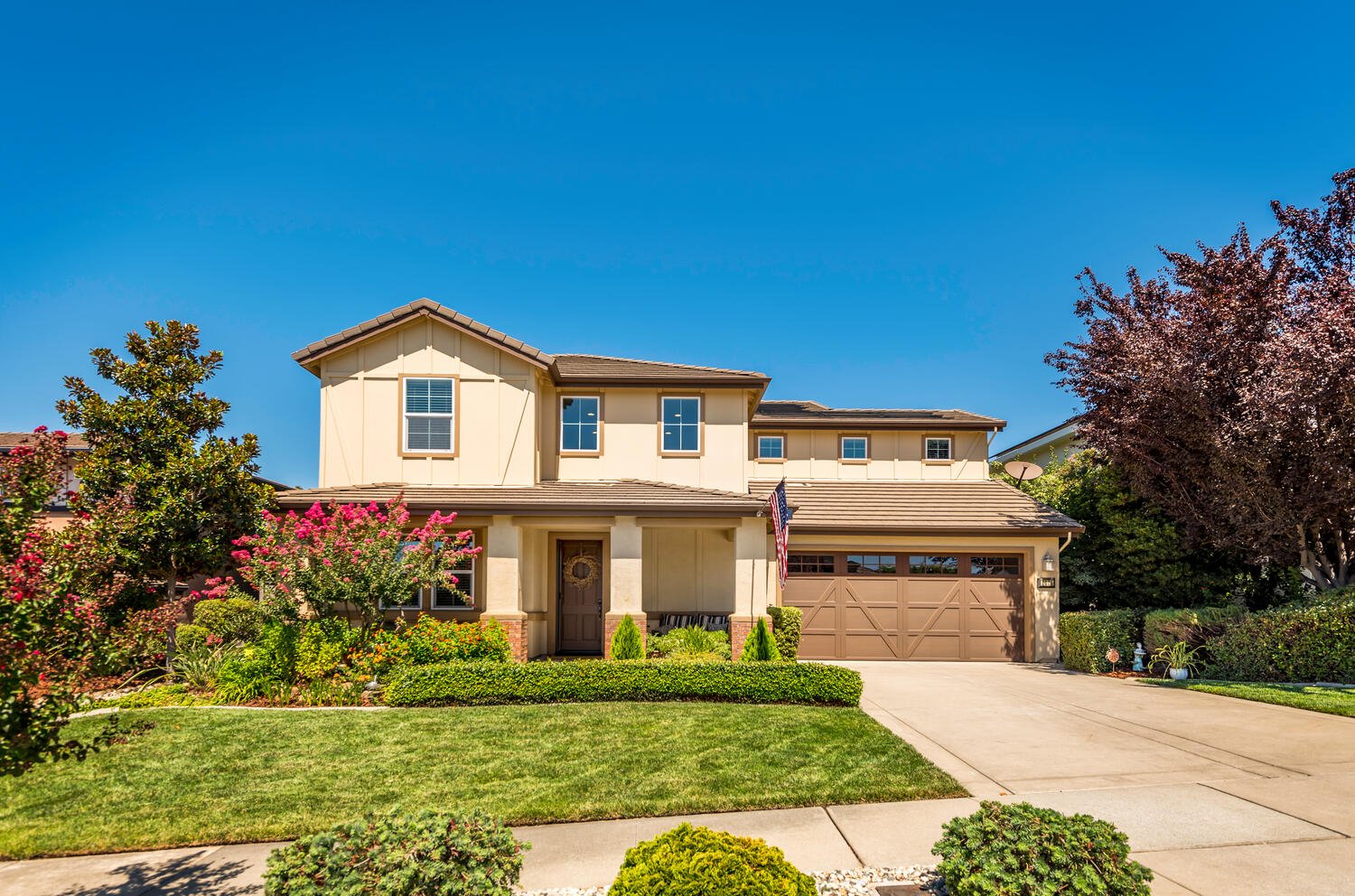
2025 Larkstone Place, El Dorado Hills, CA 95762
STUNNING ENERGY EFFICIENT HOME WITH MATURE LANDSCAPING IN THE DESIRABLE COMMUNITY OF BLACKSTONE
Exceptional quality Blackstone home with owned solar. This remarkable residence presents 2,768 square feet, 4 bedrooms, 2.5 bathrooms, and an office. As you enter through the charming covered porch, you are welcomed by the natural light that fills the open floorplan and beautiful hardwood flooring.
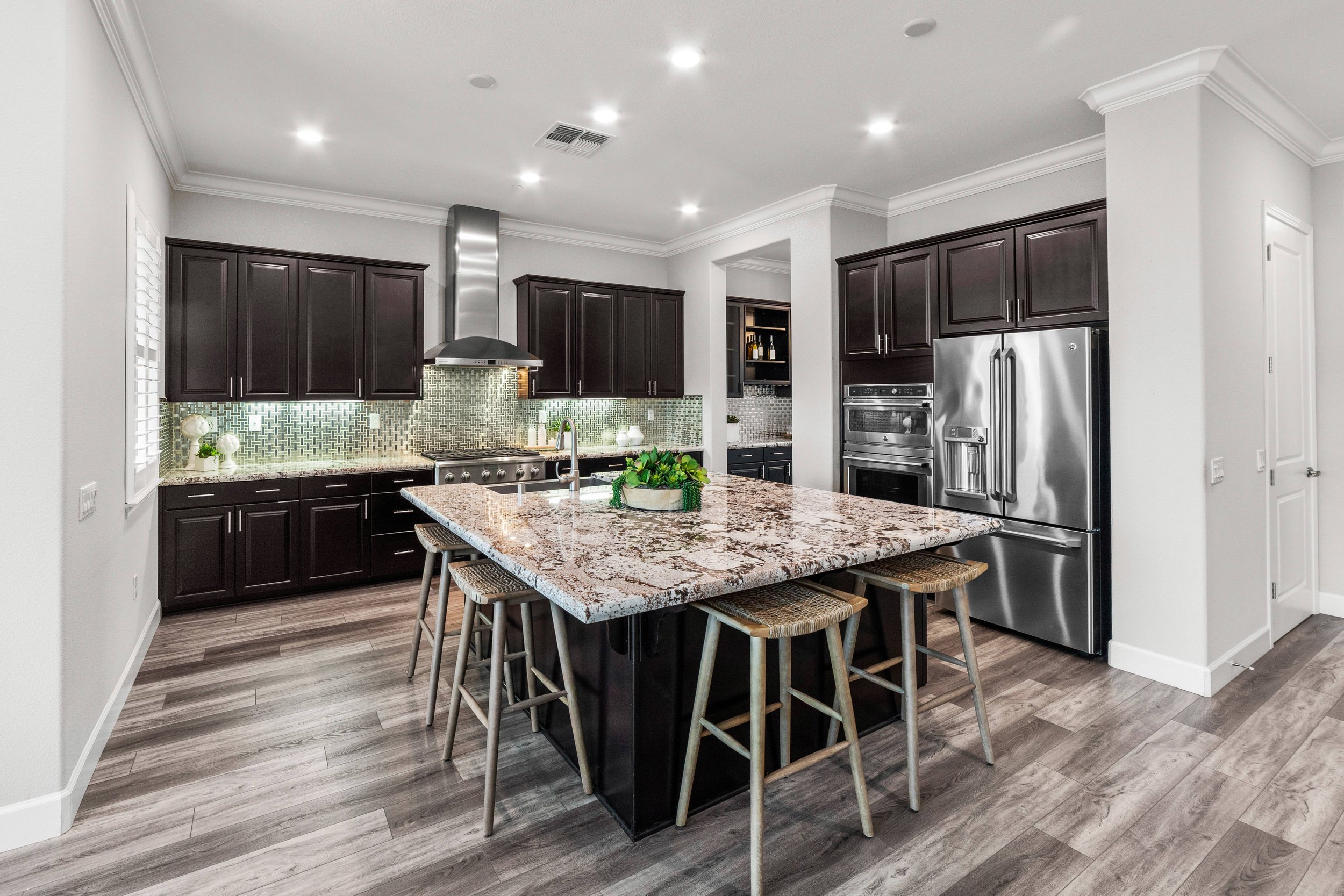
The kitchen features stainless appliances, a 5-burner gas range, two ovens, a walk-in pantry, a spacious nook, and an island that overlooks the great room. The family room and dining room are separated by a stunning double-sided fireplace. An office and half bathroom complete the main level of the home.
Upstairs, a large and open hallway divides the master bedroom and the remaining three bedrooms and full bathroom. The master suite boasts a spa-like bathroom with dual sinks, a soaking tub, a shower stall, and a walk-in closet. The laundry room is conveniently located on the upper floor. Retreat to the park-like backyard that offers an expansive concrete patio, mature landscaping, a soothing water feature, a built-in BBQ, and a two-tier garden with separate irrigation. There is abundant parking with the tandem 3-car garage which showcases built-in cabinetry, overhead storage, and epoxy floors.
Enjoy the lowest HOA & Mello Roos in the community and the highly desirable location that allows for an ideal El Dorado Hills lifestyle; just a short walk to the award-winning K-8 Montessori Charter School.
Listed at $829,900

July 2022 - Luxury Market Report for Sacramento County
View the real estate market data for Sacramento County California luxury homes for July 2022.

An Overview Of How Mortgage Interest Rates Are Determined
Several factors affect how mortgage rates are determined today, but you can only control one aspect: the personal factors. Lenders look at your qualifying factors to determine your risk level. The better your qualifying factors, the better the interest rate they’ll offer.
But it all starts with the current market rates, so you may wonder how the market affects interest rates.
Mortgage rates are affected by the overall economy. When the economic outlook is good, rates tend to increase, and rates fall when they’re not so great. It seems somewhat backward, but here’s the reasoning.
When the economy is doing well, borrowers can afford more. Without increased rates, the demand for mortgages could exceed the bandwidth of most lenders. Slightly rising rates keep everyone on the same level.
Conversely, when the economy declines and unemployment rates increase, interest rates fall to make it more affordable for borrowers to take out loans.
Frequency Of Interest Rate Changes
Every day, banks receive rate sheets. This doesn’t mean rates change daily, but they can. In fact, they can change multiple times a day.
Which Market Factors Affect Mortgage Rates?
Market factors are some of the largest driving forces behind mortgage rates. The Federal Reserve, bond market, Secured Overnight Finance Rates, Constant Maturity Treasury, the health of the economy and inflation all affect mortgage rates.
Federal Reserve
Many people assume the Federal Reserve sets mortgage rates. They don’t, but the Federal Reserve does affect rates. The Fed controls short-term interest rates by increasing them or decreasing them based on the state of the economy. While mortgage rates aren’t directly tied to the Fed rates, when the Fed rate changes, the prime rate for mortgages usually follows suit shortly afterward.
The Federal Reserve controls short-term interest rates to control the money supply. When the economy is struggling, as has been the case during COVID-19, the Fed lowers rates, which is why you’ve likely heard rates are close to 0%. These are not the rates given to consumers, but the rates at which banks can borrow money to lend to consumers.
When the Fed decides they need to tighten up the money supply, they raise the Fed rate. While this doesn’t directly increase mortgage rates, eventually, banks and lenders must follow suit to keep up with their costs to borrow money from the Fed.
Bond Market
Mortgage rates have a reputation of being tied to the 10-year Treasury note when they’re tied to the bond market.
Mortgage-backed securities, or mortgage bonds, are bundles of mortgages sold in the bond market. Bonds affect mortgage rates depending on their demand. When the demand for mortgage bonds is high (usually when the stock market performs poorly), mortgage rates increase, and when the demand is low, mortgage rates decrease.
Secured Overnight Finance Rate
A secured Overnight Finance Rate (SOFR) is an interest rate set based on the cost of overnight borrowing for banks. It’s often used by lenders to determine a mortgage’s base interest rate, depending on the type of home loan. It’s grown in popularity to serve as the replacement for the London Interbank Offer Rate (LIBOR), which is being phased out at the end of 2021.
Welcome to our Blog!

- Categories -
- Recent Posts -